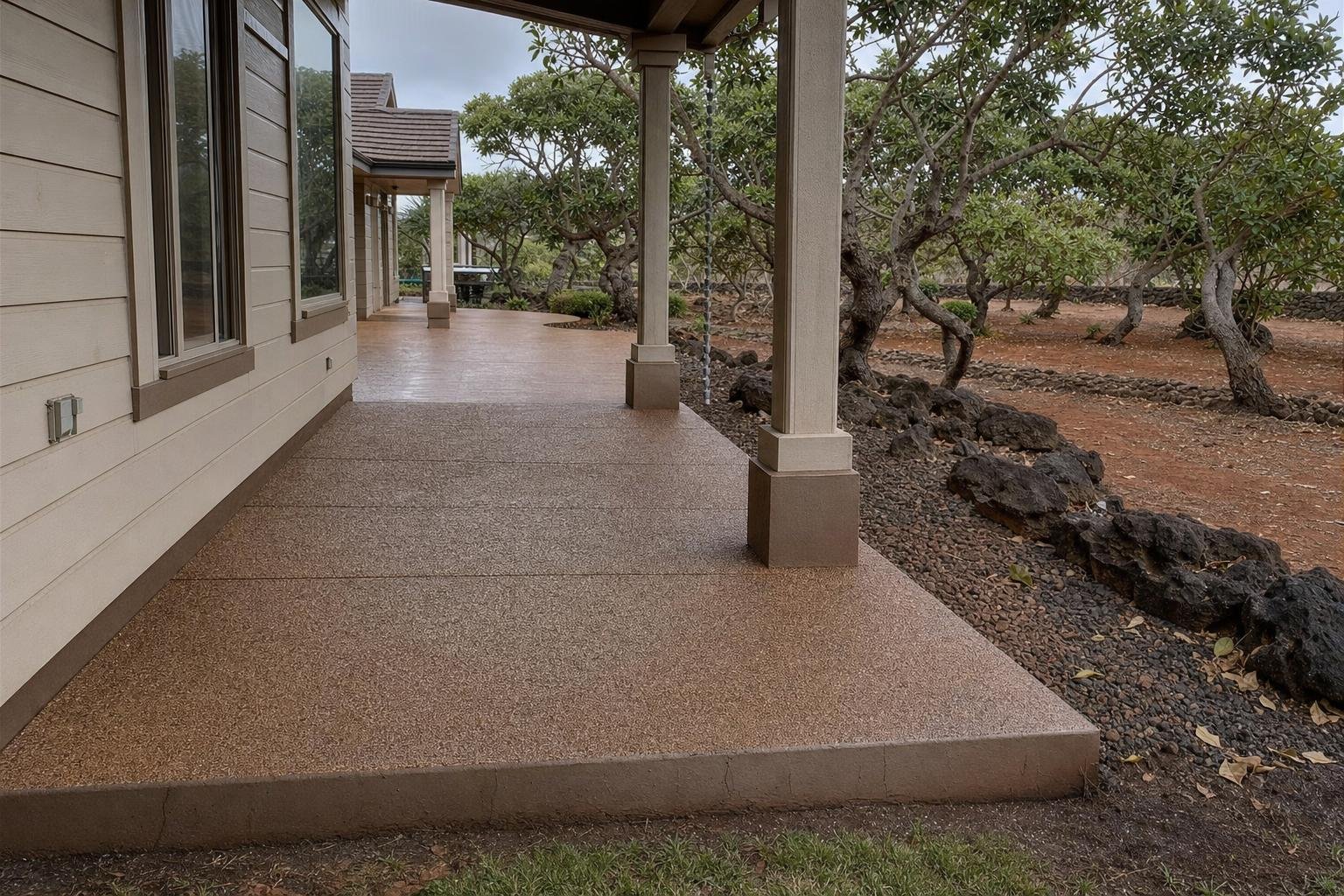
This page covers what we check on your site before we price a job, what the square-foot ranges look like, and what goes into the finish and the joints.
The work we do
We handle new flatwork (slabs, driveways and pads), tear-out and replacement of damaged sections, and repairs when a section can be saved. The same crew handles the job from the site visit through the forms, the pour and the finish, so you are not coordinating a material supplier and a separate finisher.
The median Kahului home was built in 1979, so a lot of our driveway calls involve concrete that has been down for decades. On those jobs, part of the scope is deciding what stays, what gets cut out, and how the new pour ties into what is left.
This guide pairs with concrete driveway installation. Looking for a concrete contractor in Kahului? See every service we offer.
What we check on your site first
Drainage comes first.
Near the harbor, Hoaloha Park sits on mapped fill that doesn't shrink or swell much but does flood now and then, and the area is a FEMA Special Flood Hazard Area. Rising sea levels are expected to push coastal groundwater higher there. We don't assume an inland lot behaves like harbor-side ground, and we don't assume the reverse either. We look at the parcel in front of us.
Timing is the other piece. January is the wettest month at around 3.6 inches and June the driest at around 0.6 inches. We schedule pours around that, and a winter job may need more room in the calendar for rain days.
What it costs
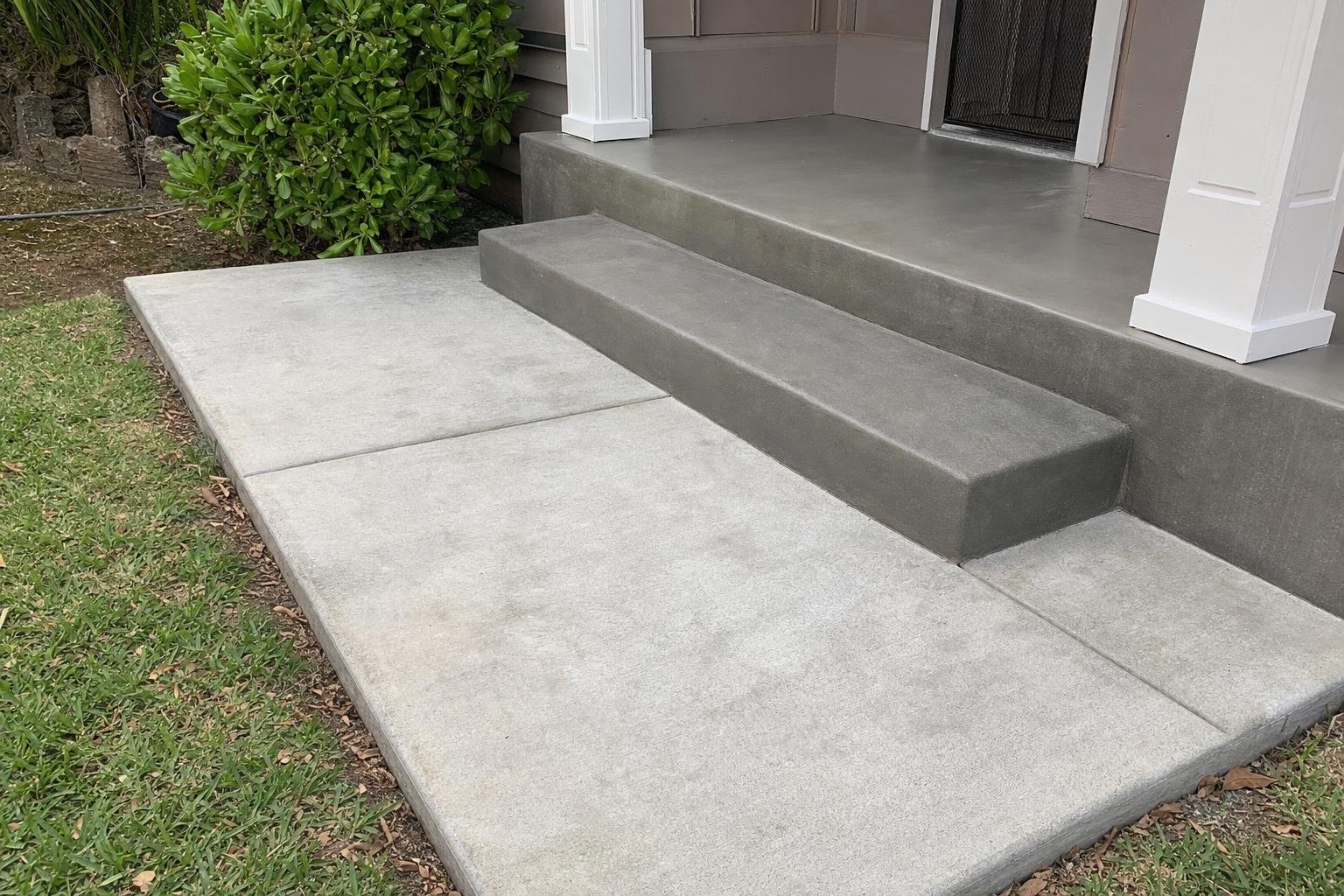
A new concrete slab typically runs $5 to $25 per square foot. A concrete driveway runs $10.50 to $25 per square foot. Tell us the size and use of your slab or driveway when you call and we'll quote a typical range right then. The exact number gets confirmed after we've seen the site.
Four things push a Kahului job toward the low or high end of those numbers: the square footage, the rebar reinforcement the slab calls for, how much base and drainage work the site needs, and whether old concrete has to come out before we pour. A flat, well-drained lot with nothing to remove sits at a very different point than a flood-prone driveway replacement.
Finishing and joints
After the bull float, we wait for the moisture sheen to leave the surface before we float it again. With Kahului's heat and steady northeasterly trade winds, we go by the surface, not the clock. Then we steel-trowel it for a smooth finish or broom it for texture, depending on what the slab is for.
Contraction joints are tooled or sawcut so the slab cracks where we want it to. On a 4-inch driveway slab, we space them no more than 10 feet apart and cut them to about one-quarter of the slab thickness, roughly an inch. Every joint line is drawn on the layout in our written quote before the concrete truck shows up.
Getting a number for your job
Before any work starts, we visit the lot, look at the drainage, the access and any existing concrete, and write up the scope, the reinforcement, the finish, the joint layout and the cost.
What the Work Covers
On a typical job, steps like these come up:
- Place and align reinforcing steel or other specified reinforcement on the prepared base.
- Place workable concrete near its final position and consolidate it around forms and reinforcement to remove air pockets.
What to Expect to Pay
Treat these figures as a planning guide, and we can talk through a typical range before anything is booked.
$10.50–$15.50 per sq. ft.
$13–$18 per sq. ft.
$4–$6.50 per sq. ft.
Fast Scheduling
Call us with the details you have, with no pressure either way.
Updated October 2026