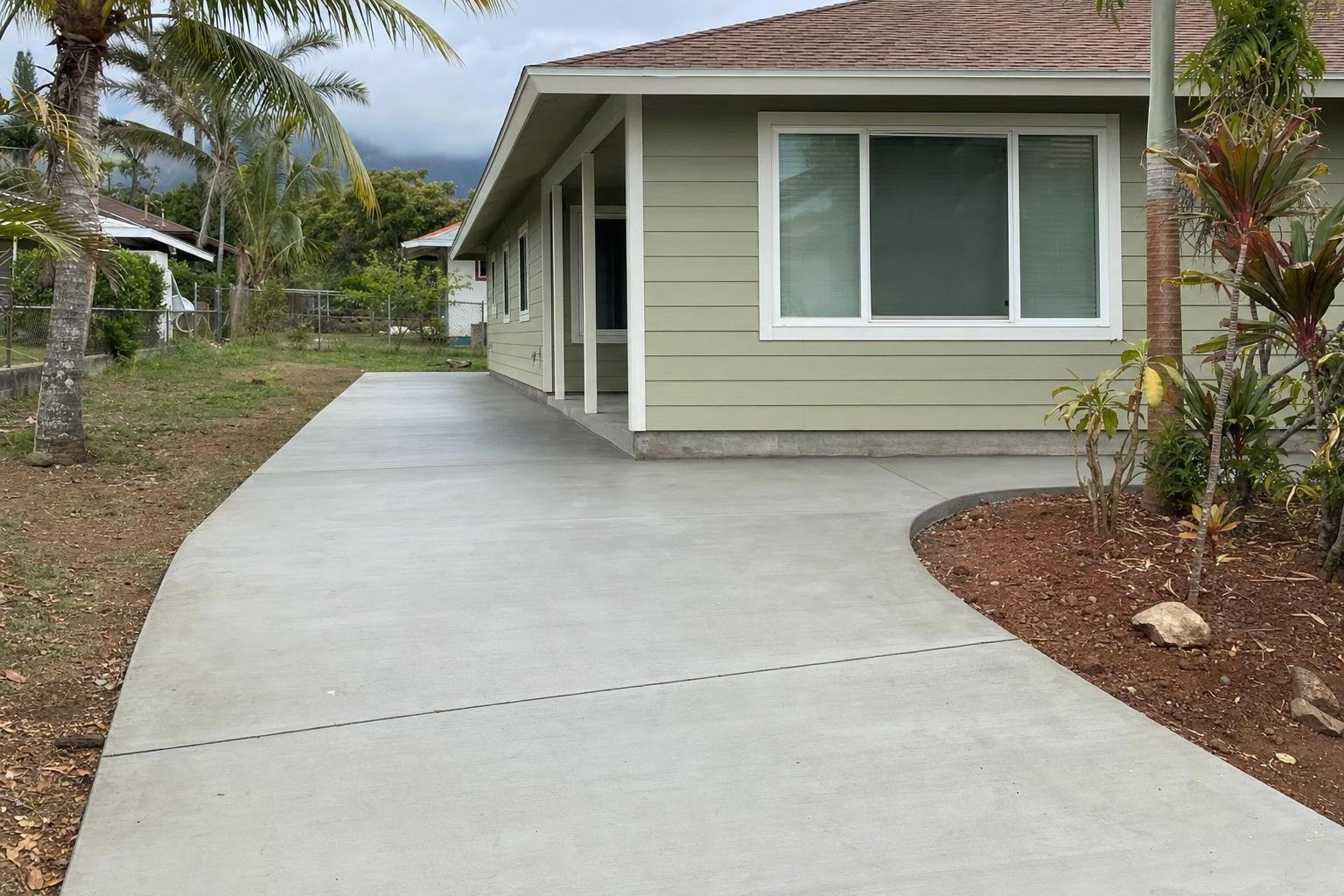
We're a concrete crew working in Kahului. We pour and replace driveways, walkways, patios, slabs and footings, and we do the excavation and subgrade prep underneath all of it. Most calls we get come down to the same problem: a surface that has done its time, sitting on ground that moves with the seasons. Below is how we scope that work, what drives the price, and what helps us on the first call.
Older slabs on ground that moves
Most of the housing in Kahului went up in the 1970s, so a lot of the driveways, carport slabs and walkways we look at have been taking weather for decades.
The damage comes from the timing of the rain more than the amount. We get about 21.7 inches a year, but January averages around 3.6 inches and June around 0.6. Soil that soaks through the wet months and dries out through the summer swells and shrinks under a slab. Over the years that shows up as cracking, settling, and slabs that no longer sit level with a garage door or a step.
Ranch-style homes are the most common style here, and many sit on a concrete slab, so a lot of the work around a house shares the same soil. The town also has low-rise condos and townhouses alongside single-family homes. On your own lot, you decide what gets fixed. On a shared building, part of what's moving may belong to the association, and that affects who approves the work.
What we take on
Driveways, walkways, patios, carport and garage slabs, pads and footings. When only part of a slab has failed, we replace that section instead of pushing you into the whole thing. When the surface is past patching, we do full removals.
Most of the hours on a concrete job go into work nobody sees once it's poured: the digging, the subgrade and the subbase. A slab can look right the afternoon it's finished. Whether it still looks right after a few wet seasons depends on what's under it.
We work on detached homes and on shared residential buildings, and they run differently. On a low-rise property, access is tighter, a machine may have to come through a carport, and there's common area to protect and neighbors to work around. We want to know that on the first visit, not when the truck shows up.
What sets the price
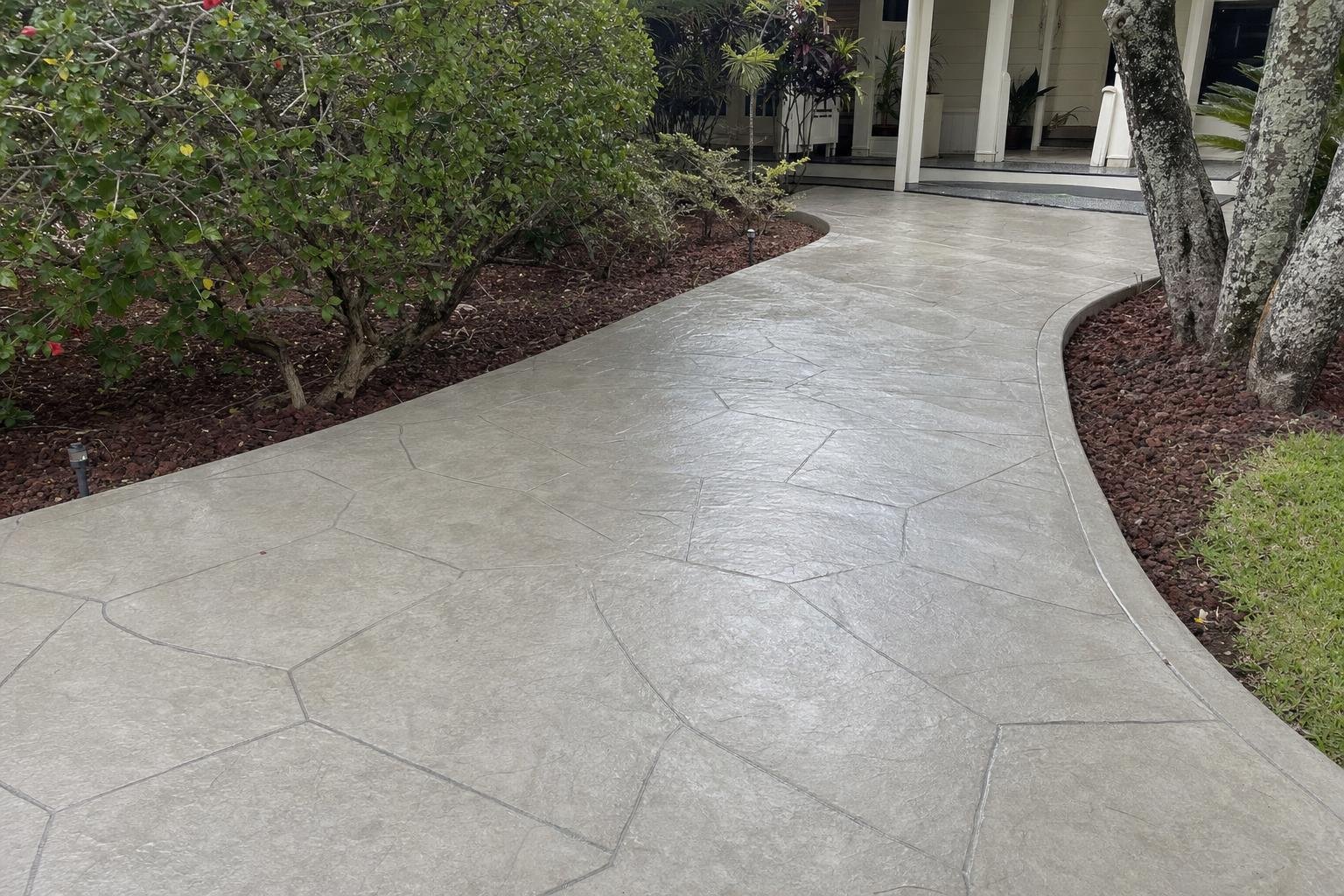
Call us and we'll talk through the job and give you a rough idea of what's involved. The exact number comes after we've seen it, because square footage rarely decides the price. Depth does: how far down we have to excavate, how much soft or unsuitable material has to come out and be hauled away, whether an aggregate subbase is specified and how thick, the slab thickness, and access. A driveway a truck can back up to costs less to pour than a courtyard slab that comes in by wheelbarrow through a carport.
The site visit is mostly looking and probing. We check where water goes in a hard rain, whether a low spot is in the slab or in the ground under it, and whether the existing base is worth keeping. On older properties we often find a soft pocket or an old section with nothing solid under it. We'd rather find that before quoting than halfway through the dig.
You get a written scope and a number together, so you can see what you're paying for. If a repair will hold for years and a full replacement won't buy you much more, we'll tell you.
How we build it, and where shortcuts show up
We cut and remove the old surface, excavate to the required depth and dig out any soft spots. Then we prepare a level subgrade, grade and compact it, and place and compact an aggregate subbase where it's specified. After that come the forms, the pour, and a cure period. We'll tell you when the slab can take weight.
The usual shortcut is skipping the compaction or pouring over a soft pocket nobody dug out. On day one it looks the same. A few wet seasons later it shows up as a crack or a low corner, and then you're paying for the same excavation twice. We don't rush the compaction.
Some cracks don't need work yet. A hairline crack in a slab that isn't moving and isn't letting water in usually isn't a job, and we'll tell you to keep an eye on it instead of selling you a replacement.
Permits, and what helps when you call
Whether a permit or inspection applies depends on what the work is and where it sits. A slab on your own lot is one case. Work on a shared building, or work that changes how water leaves your property, is another. Our written scope lists what has to happen before we start. If we don't have a firm answer on a permit question, we'll say so and point you to whoever can give you one.
Three things help us most when you call. First, photos of the whole area, not just the crack, so we can see how the slab sits against the house and the grade. Second, a note on where water stands after a heavy rain. Third, whether this is your own detached home or a shared low-rise property. With those, we can usually tell you on the first visit whether you need a repair, a replacement, or nothing yet.
How It Works
From the first conversation on, this is the order things happen in.
-
Reach Out
Describe the job and your timing, and you'll hear what we honestly think.
-
We Take a Look
We come out and look at the job in person, then walk you through what we find.
-
Written Estimate
We put the work, the timeline, and the number on paper before you agree to anything.
Services We Offer
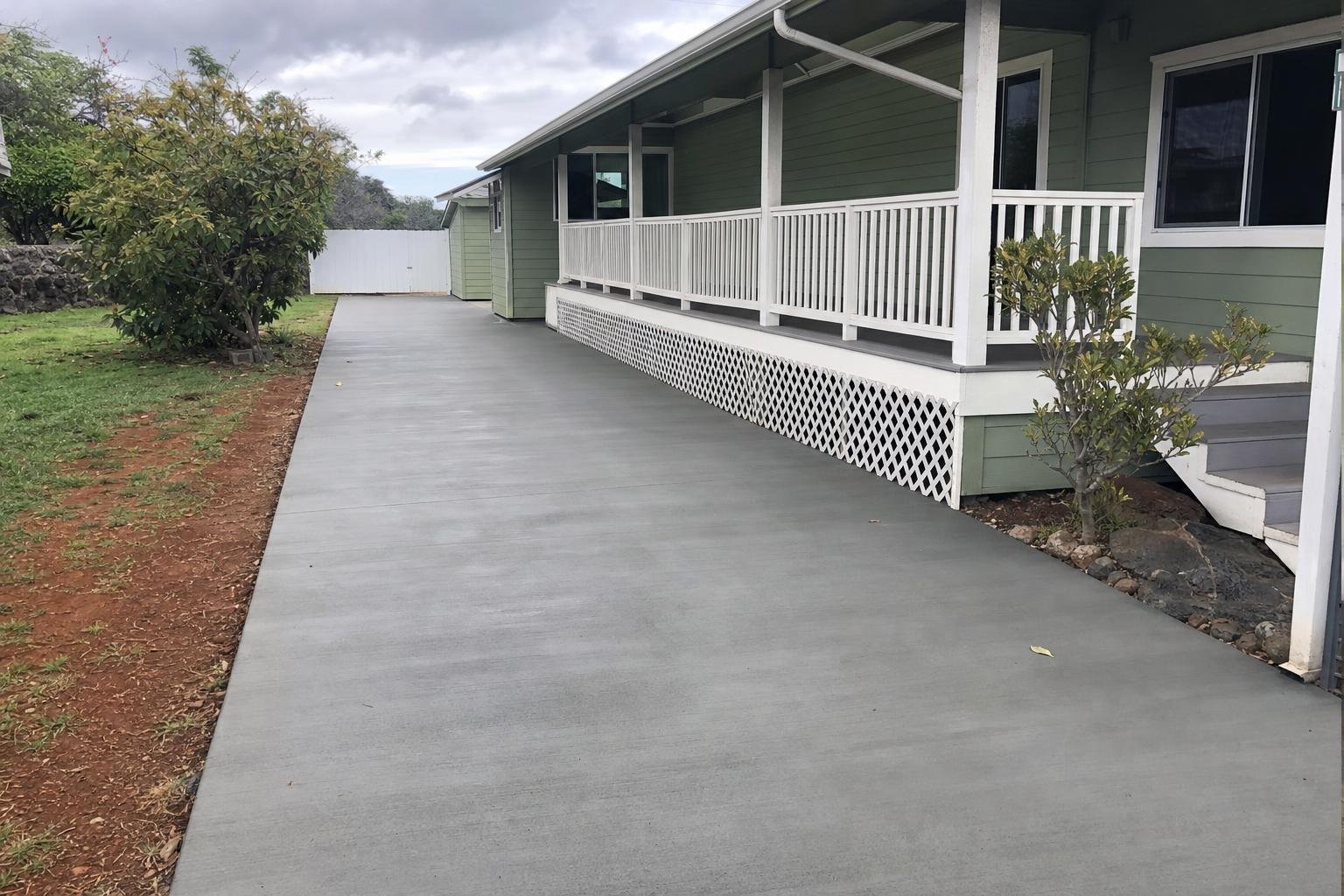
Concrete Driveway Installation
Details →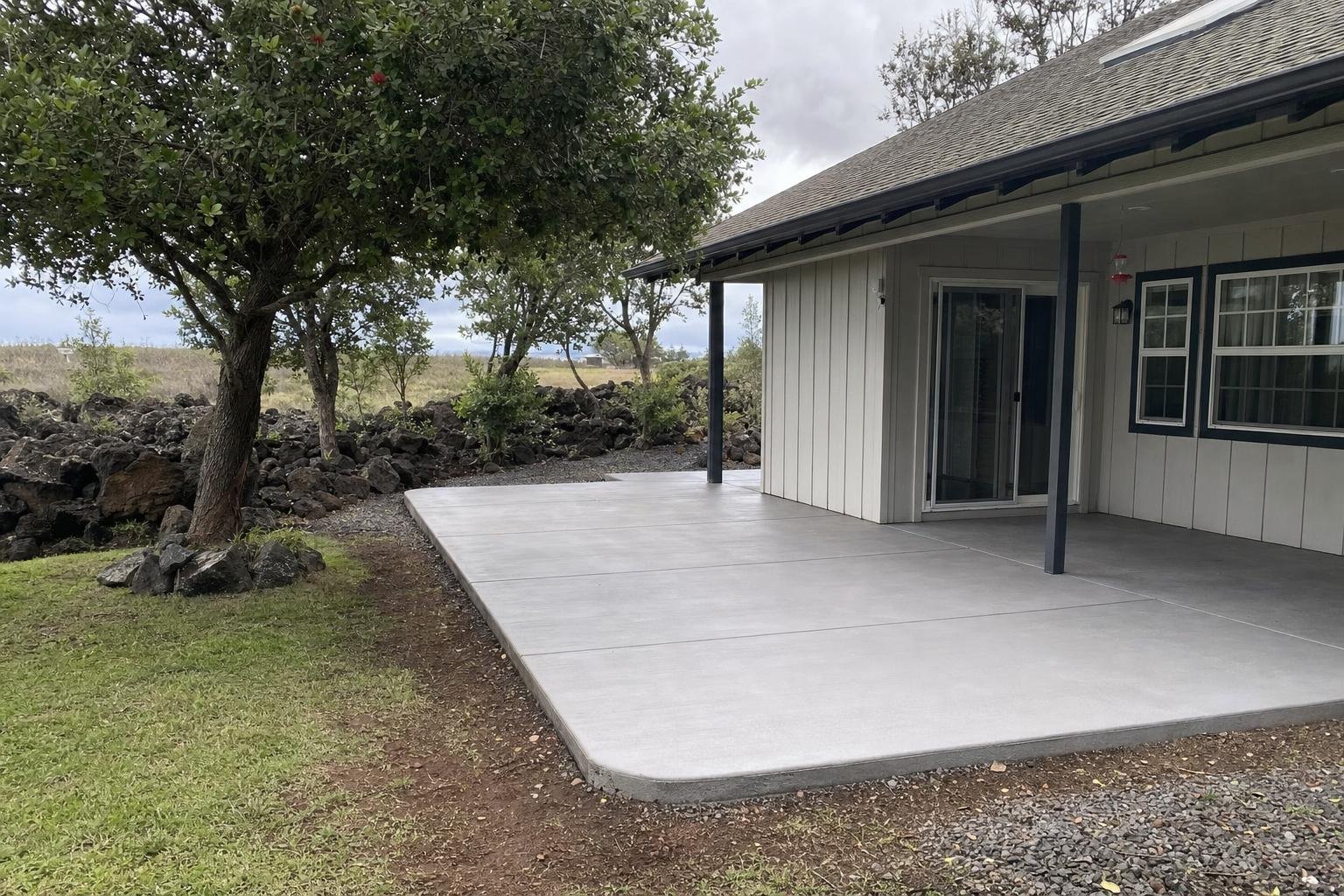
Concrete Patio Installation
Details →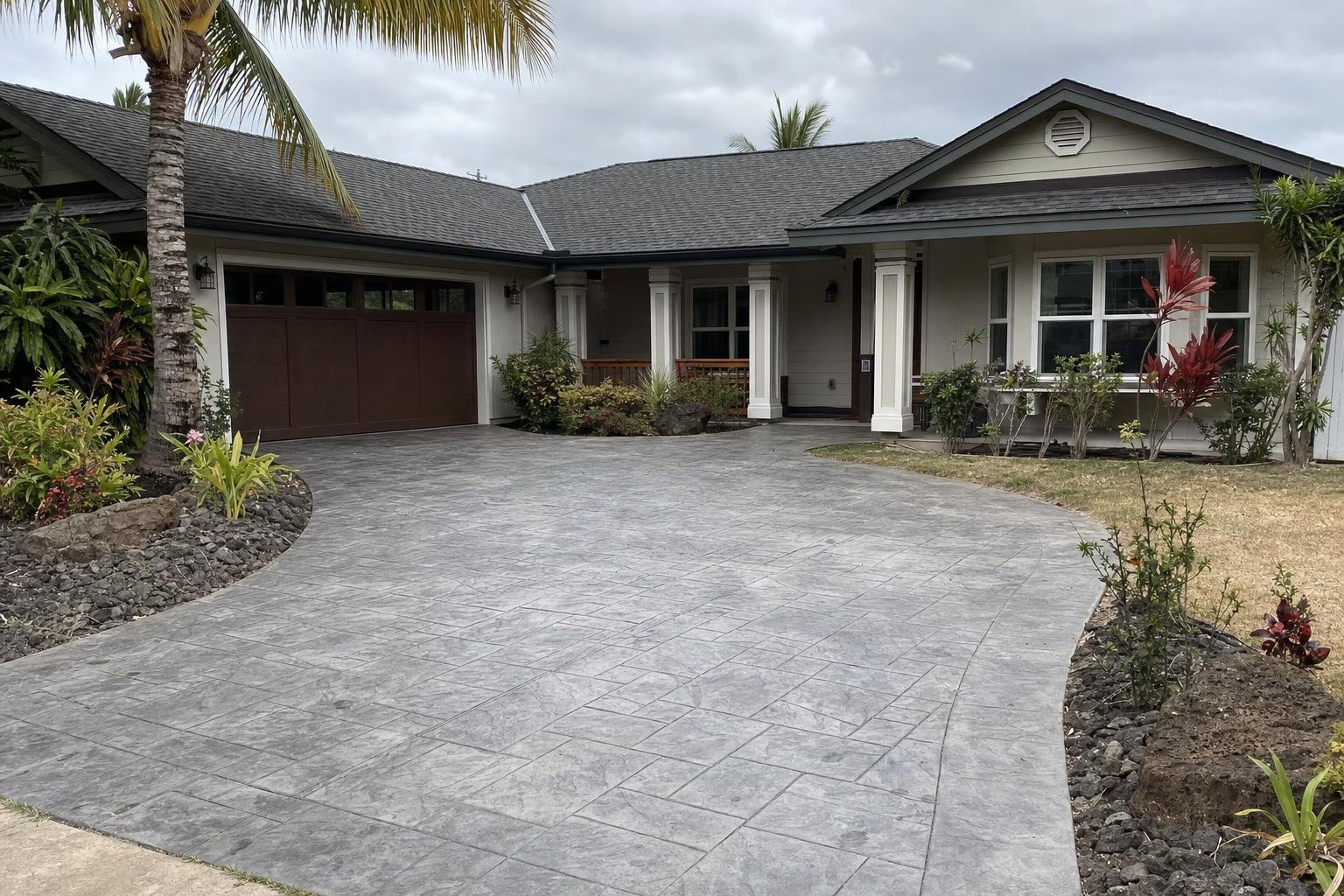
Stamped Concrete Installation
Details →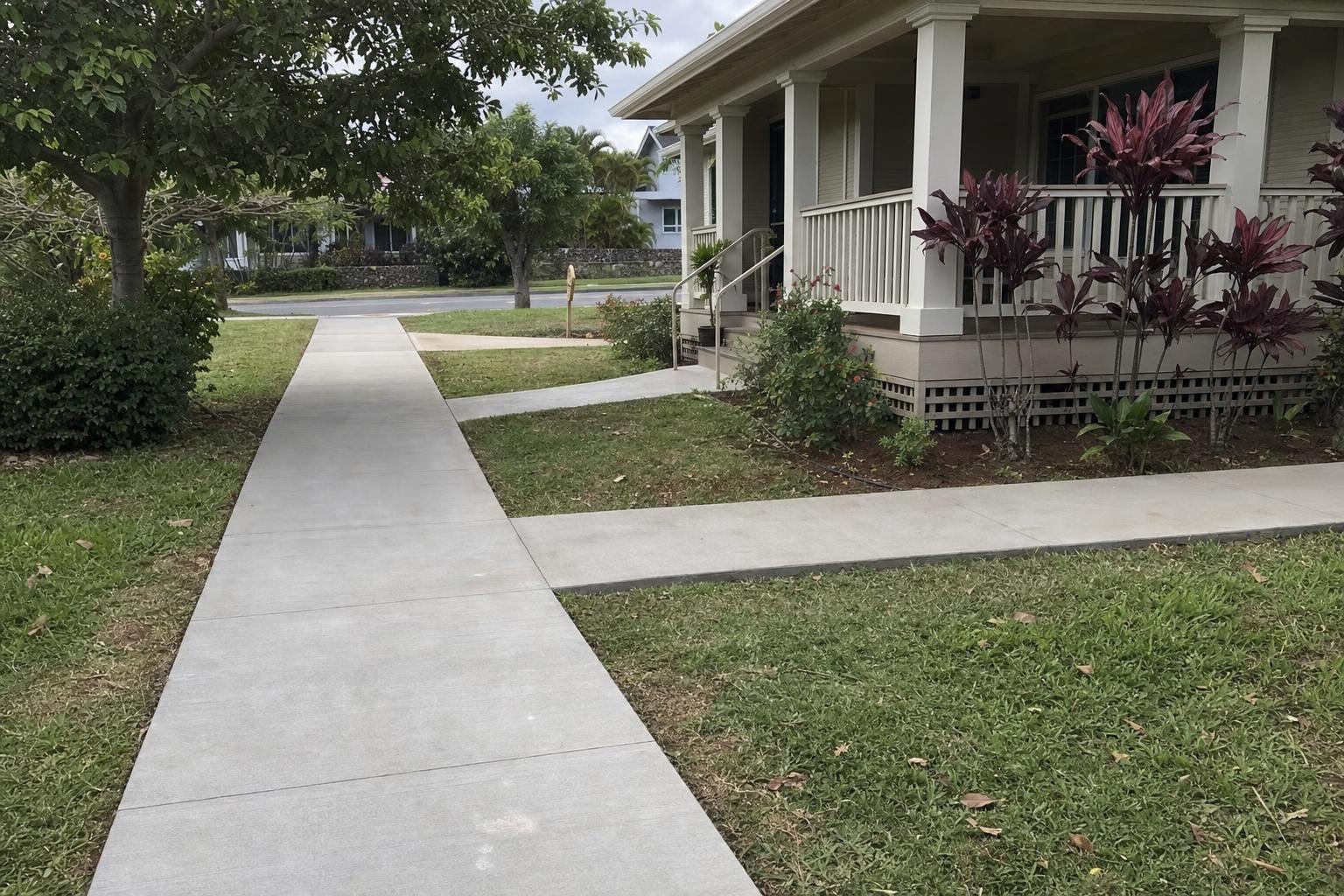
Concrete Walkway and Sidewalk Installation
Details →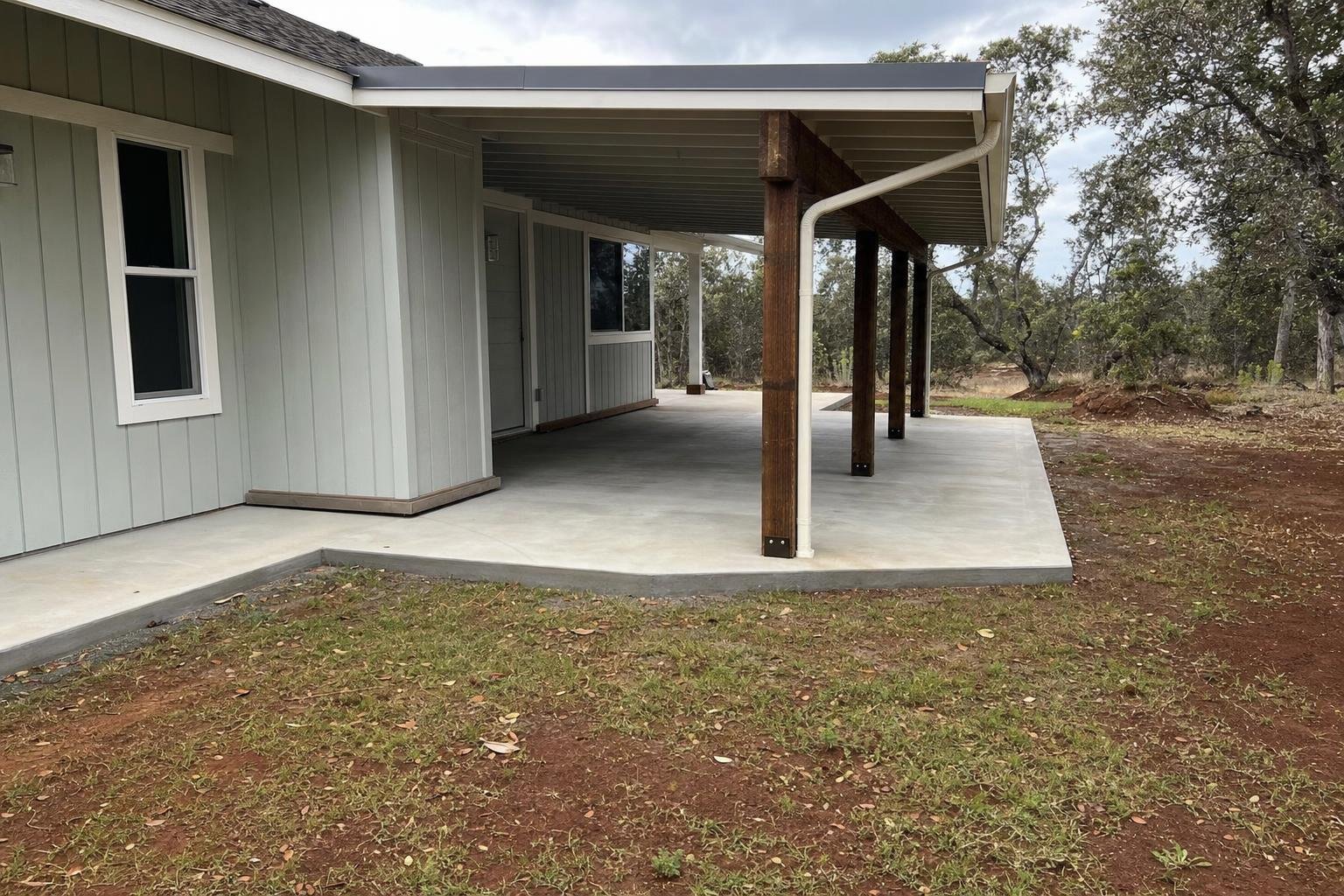
Concrete Slab and Foundation Installation
Details →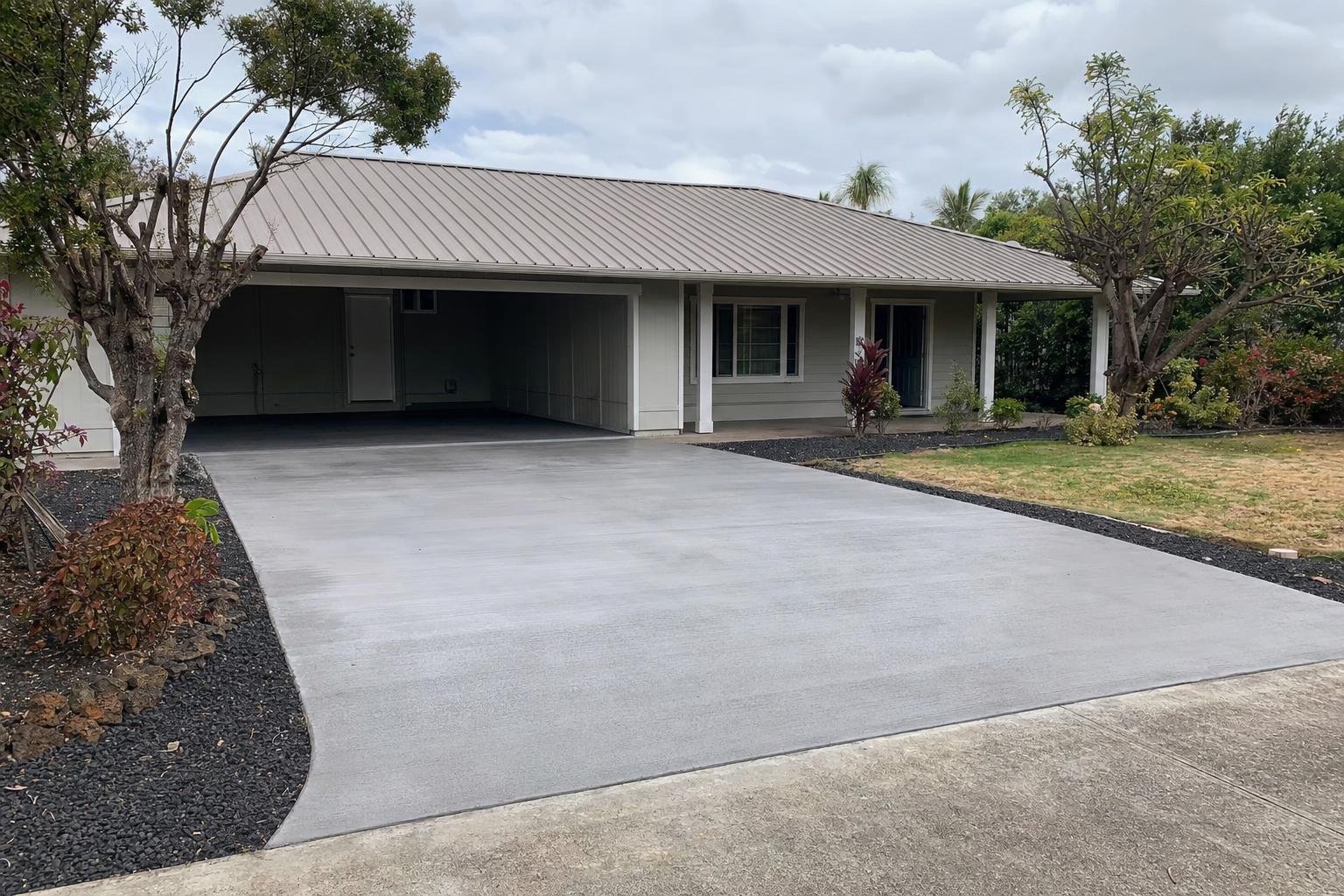
Concrete Resurfacing
Details →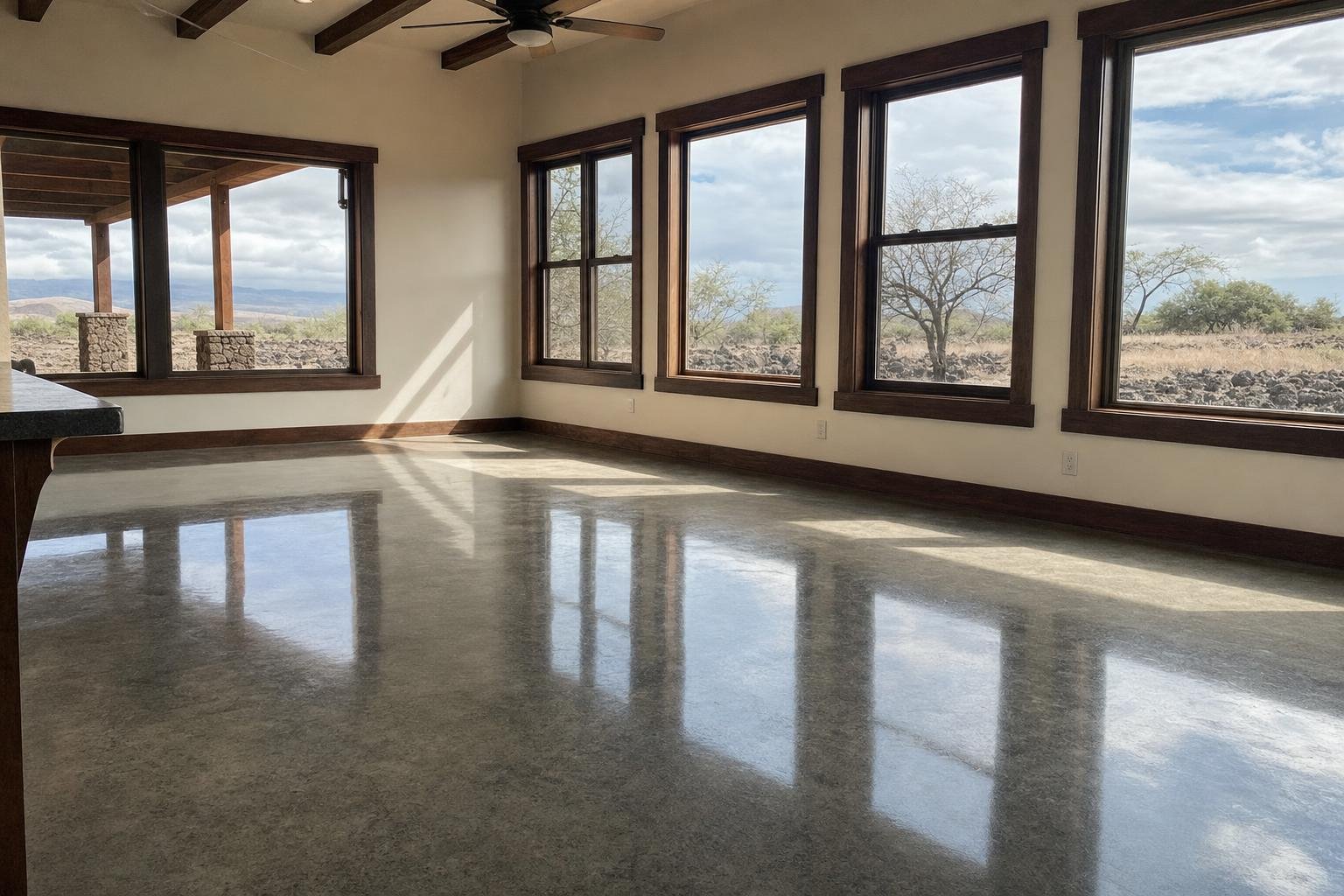
Polished Concrete Floors
Details →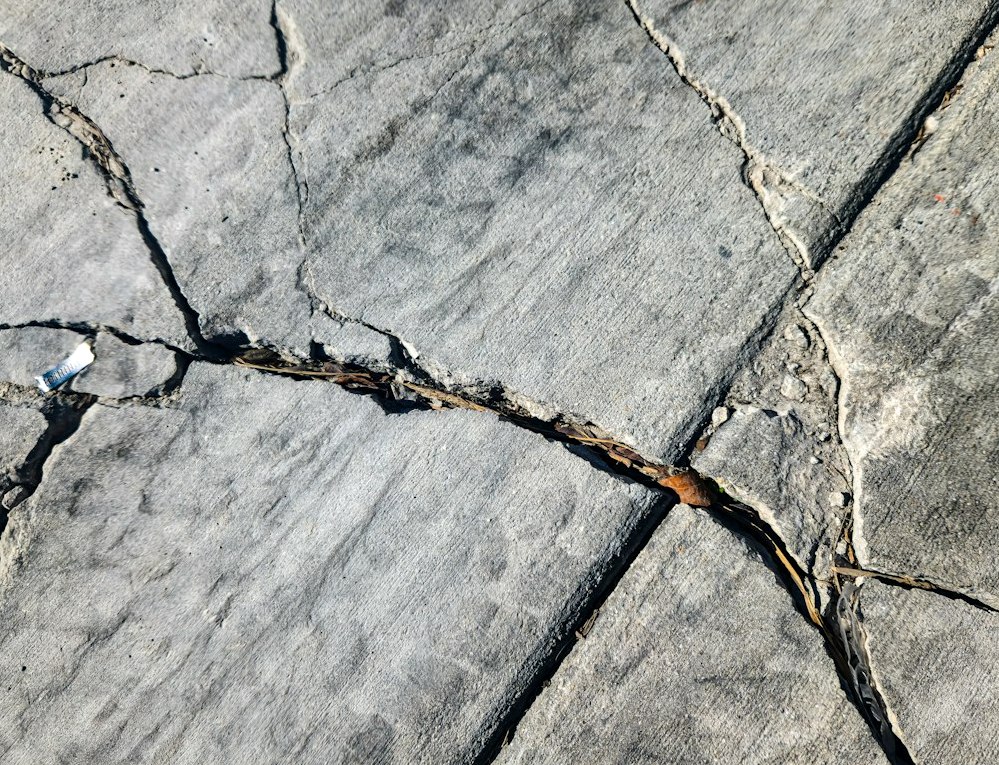
Concrete Repair and Restoration
Details →What to Expect to Pay
The figures here give you a sense of scale, and we'll go over what pushes a job toward either end.
$10.50–$25 per sq. ft.
$13–$18 per sq. ft.
$4–$6.50 per sq. ft.
What We Commit To
- Free QuotesNo fee for the visit, no fee for the write-up.
- Written quote before any workYou see the number before anyone lifts a tool.
- Straight answers, no sales pitchQuestions get answers, not a close.
Tell Us About the Job
No obligation
Call (808) 444-0634What happens next
- Call or send the form
- Someone local calls back
- Get a straight answer
Our Service Area
Serving Kahului, HI and nearby communities including Wailuku, Kihei, Waihee-Waiehu, Pukalani, Haiku-Pauwela, Makawao. Call (808) 444-0634 to check that we cover your street.
- Kahului, HI
- Wailuku
- Kihei
- Waihee-Waiehu
- Pukalani
- Haiku-Pauwela
- Makawao
We cover 7 communities.
ZIP codes: 96732, 96793.
Fast Scheduling
Call (808) 444-0634 and describe the job, no obligation.