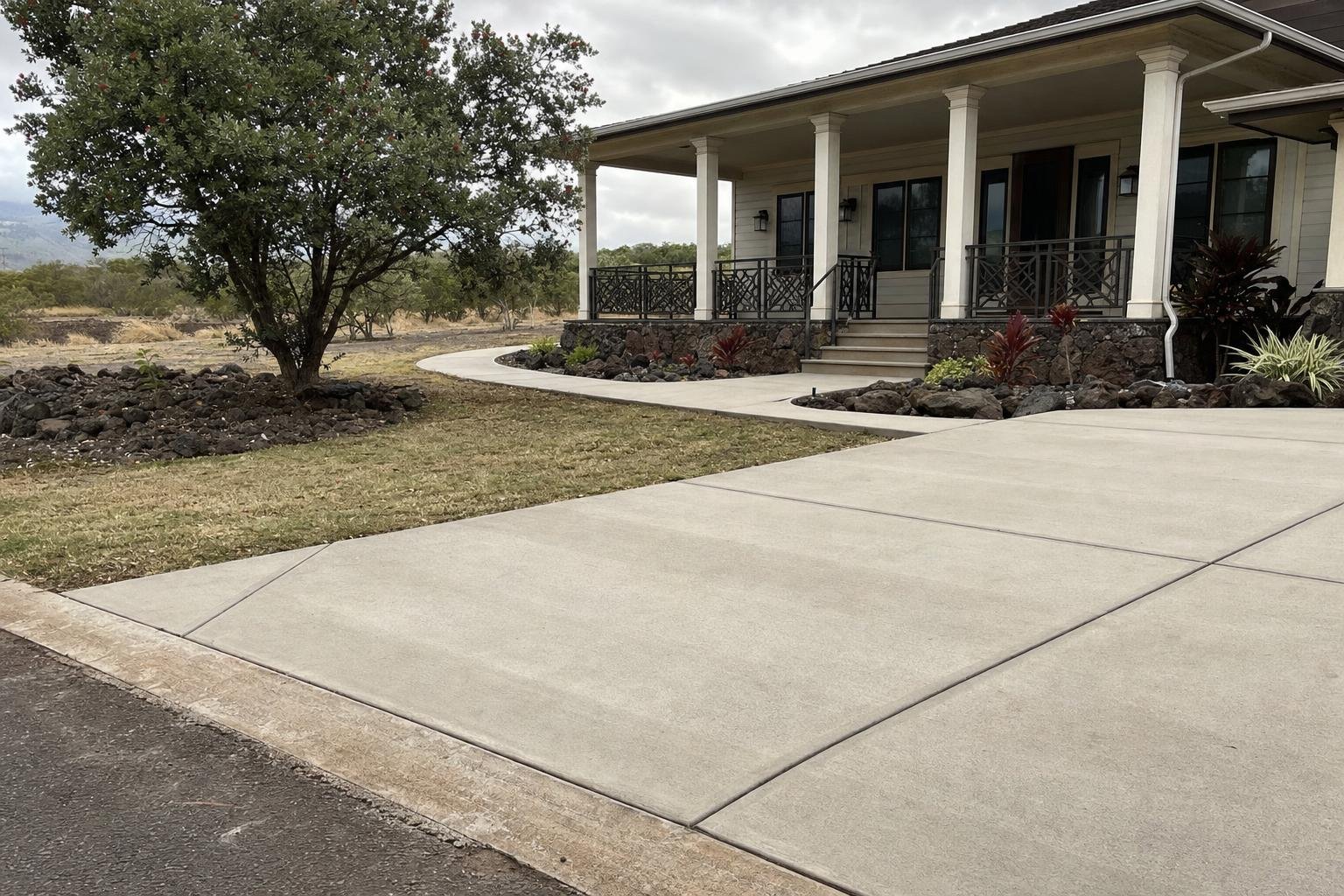
It covers the order of the work, the ground we build on here, permits, and how to tell whether a damaged slab should be patched or replaced.
What the crew does when we pour a slab
We lay out the area, then set concrete forms and stakes to the grade the slab needs. A form that shifts during the pour leaves an edge we have to grind or fill later, so we check the stakes before any concrete arrives. Once the base is prepared, we place and align the reinforcing steel or whatever reinforcement the job specifies on top of it.
On pour day we place workable concrete close to where it will end up instead of dragging it across the slab. Then we consolidate it around the forms and the steel to drive out air pockets, which is where voids along form edges come from when it's rushed. Next we screed it with a straightedge, cutting off the excess and bringing the surface to grade. Every finishing step after that works from the elevation the screed sets.
Ready for the work itself? Read about concrete repair and restoration. Need a concrete contractor in Kahului? Start on our home page.
How long a concrete job takes
How long it takes comes down to how many square feet we're pouring, how much forming the layout calls for, and whether the ground under the forms is firm or soft. A small pad with easy access goes faster than a slab we have to form around an existing structure. We give you the schedule with the quote.
Kahului runs about 3,981 cooling degree days a year, so most of the year is hot. Hot weather pulls water out of the top of a fresh slab faster than the bottom loses it, and a surface that dries ahead of the rest of the slab will crack. We plan pour times and finishing around the heat.
How we price concrete work
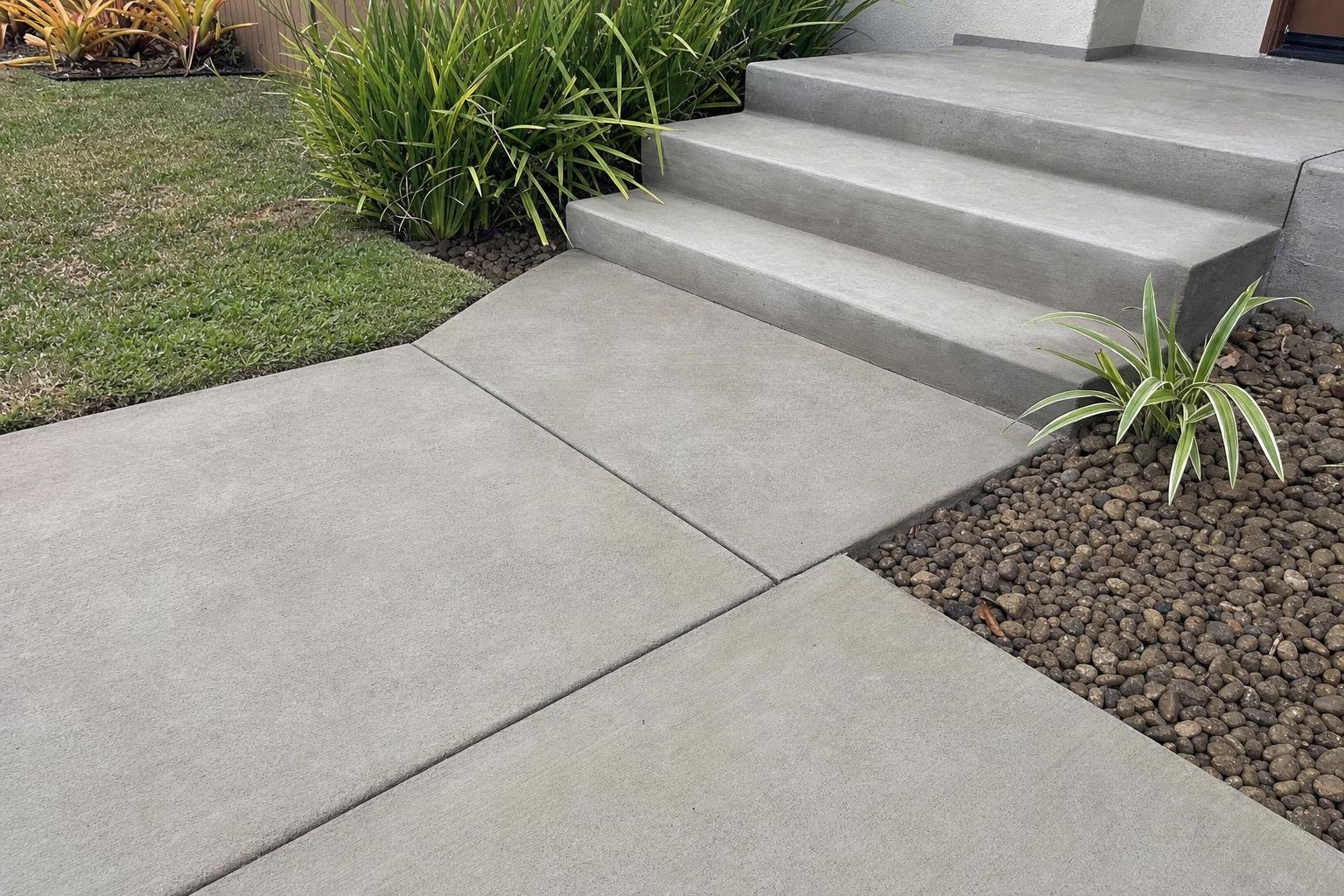
We price by the square foot, and the finish drives most of the difference. Polished concrete runs about $4 to $6.50 per square foot, depending on how much grinding and honing the floor needs. Exposed aggregate, where we bring the stone to the surface after the pour, runs about $10.50 to $15.50 per square foot. Within those ranges, the price moves with the condition of the ground, whether we're forming around existing structures, how easy the site is to reach, and how thick the slab has to be.
Tell us the rough square footage and which finish you're after when you call, and we'll put you in a typical range from those numbers; the firm figure comes once we've walked the site and seen the ground. Our written quote covers the concrete, the labor and the finishing, and it lists anything we expect to run into once the ground is open.
How the ground here shapes the base
The soils around Kahului are deep alluvial clay loams. They drain at a moderate rate and shed surface water slowly, so the ground under a slab can stay wet well after the surface looks dry. Before we set forms we test the subgrade, because soft, wet ground compresses under load and the slab on top of it settles and cracks. We also set the finished grade so water runs away from the slab edges instead of sitting against them.
The median home here was built around 1979, so we often find old concrete that has to be tied into or broken out. We price that into the scope before you get a number, so it doesn't show up later as an extra.
Can a handyman handle it, and what about permits?
A small cosmetic patch, a few square feet of leveling compound or a filled surface chip is handyman-sized work. Forming and pouring a structural slab, placing reinforcement and finishing to grade is a different job. It needs proper forms, the right timing, and someone who can read how the concrete is behaving that day. Mistakes on a slab often don't show right away, but cracks and settlement tend to appear within a year or two.
Before we start, we check the county's permit process for building permit requirements on the work. If the property sits in a FEMA Special Flood Hazard Area or another high-flood-risk area, Maui County may also require a Flood Development Permit, and that can change where and how we pour. We sort this out before we give you a scope.
Patch or replace?
If the slab is cracked but solid underneath, a repair can give you years more use. If it's sinking, heaving, or cracked through its full depth and moving, a patch on top won't hold, because the problem is in the ground. In that case we break out the bad section, recheck the subgrade, correct the drainage that caused the problem, and pour new concrete with fresh reinforcement.
We give you a firm recommendation after we've seen the slab and checked the ground under it. Call us, and we'll come look and tell you which option fits.
Pricing Ranges
These ranges show roughly what this work costs, and the details of your job set the actual number.
$10.50–$25 per sq. ft.
$5–$25 per sq. ft.
$13–$18 per sq. ft.
Straight Answers
Call and tell us what you're dealing with, no obligation.
Updated October 2026