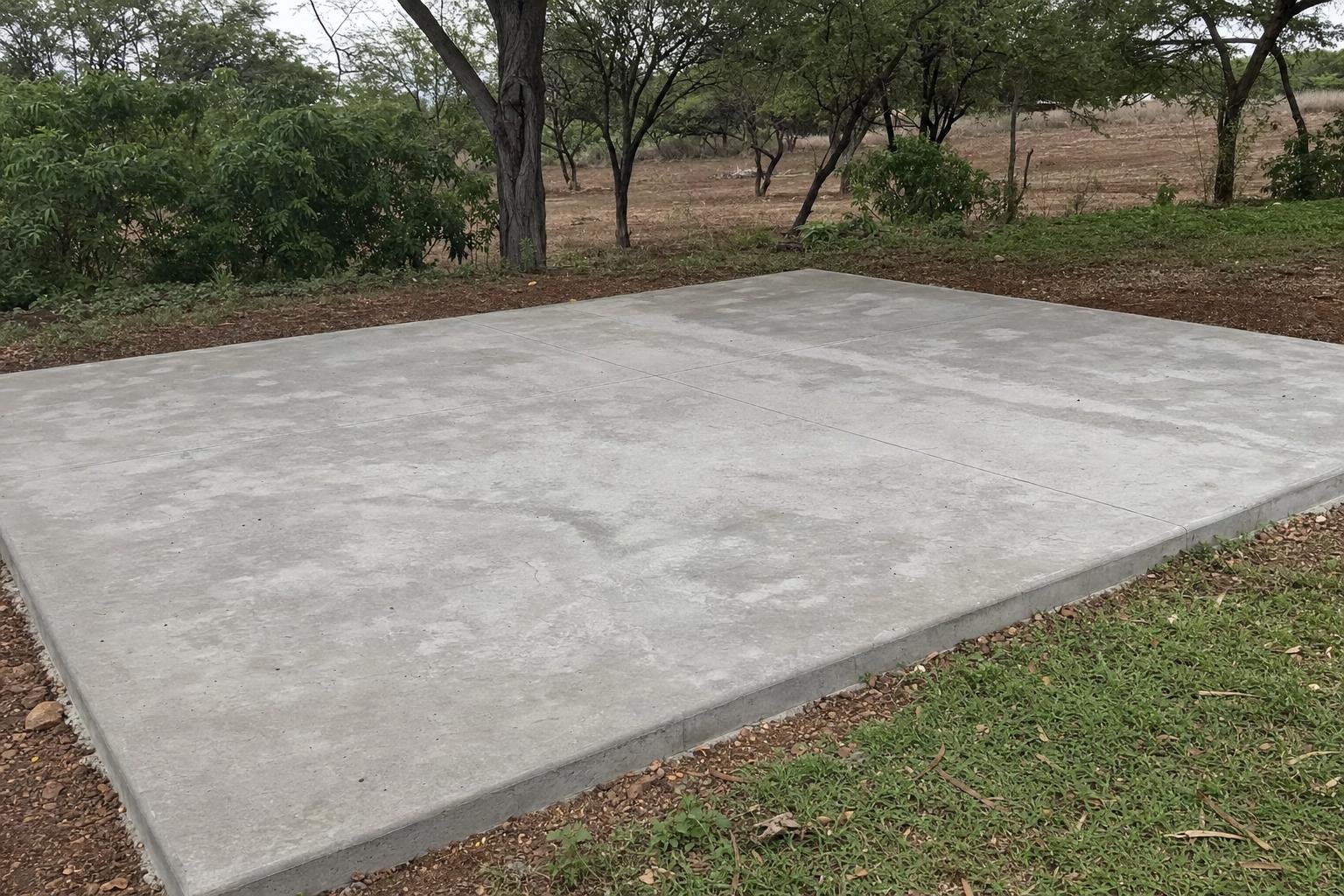
Cracks that branch and connect
One straight crack across a patio is usually shrinkage from when the concrete cured. A crack with others branching off it, or several cracks that have joined into a pattern, usually means the ground under the slab is moving. A lot of the houses here went up around 1979, so many of the slabs we see have spent four decades sitting on soil that swells and shrinks as the seasons swing between wet and dry.
When we come out, we note where the cracks run, whether they've grown since you first saw them, and what the ground along the slab edges looks like. If a section has to come out, we set, align and brace forms around the new pour, compact the base with a vibratory plate compactor, and cut contraction joints so any future cracking happens in a straight line where we planned it.
When you are ready, concrete driveway installation is the place to start. Searching for a concrete contractor in Kahului? See our home page.
Water that sits after rain
Most of our rain comes in the winter months. Kaʻahumanu and Puʻunene avenues flood in heavy storms, and that flooding reaches as far south as Wakea Avenue. Concrete in those parts of town has to move water off quickly. A puddle that hangs around after a storm means the slab has settled or the grade around it has shifted, and that water keeps feeding the ground underneath.
If the slab is still solid and the only problem is slope, resurfacing can rebuild the fall so water runs away from the house. If the slab has dropped or the base under it has gone soft from staying saturated, a new surface won't fix it. That section needs to come out and be rebuilt on a compacted base.
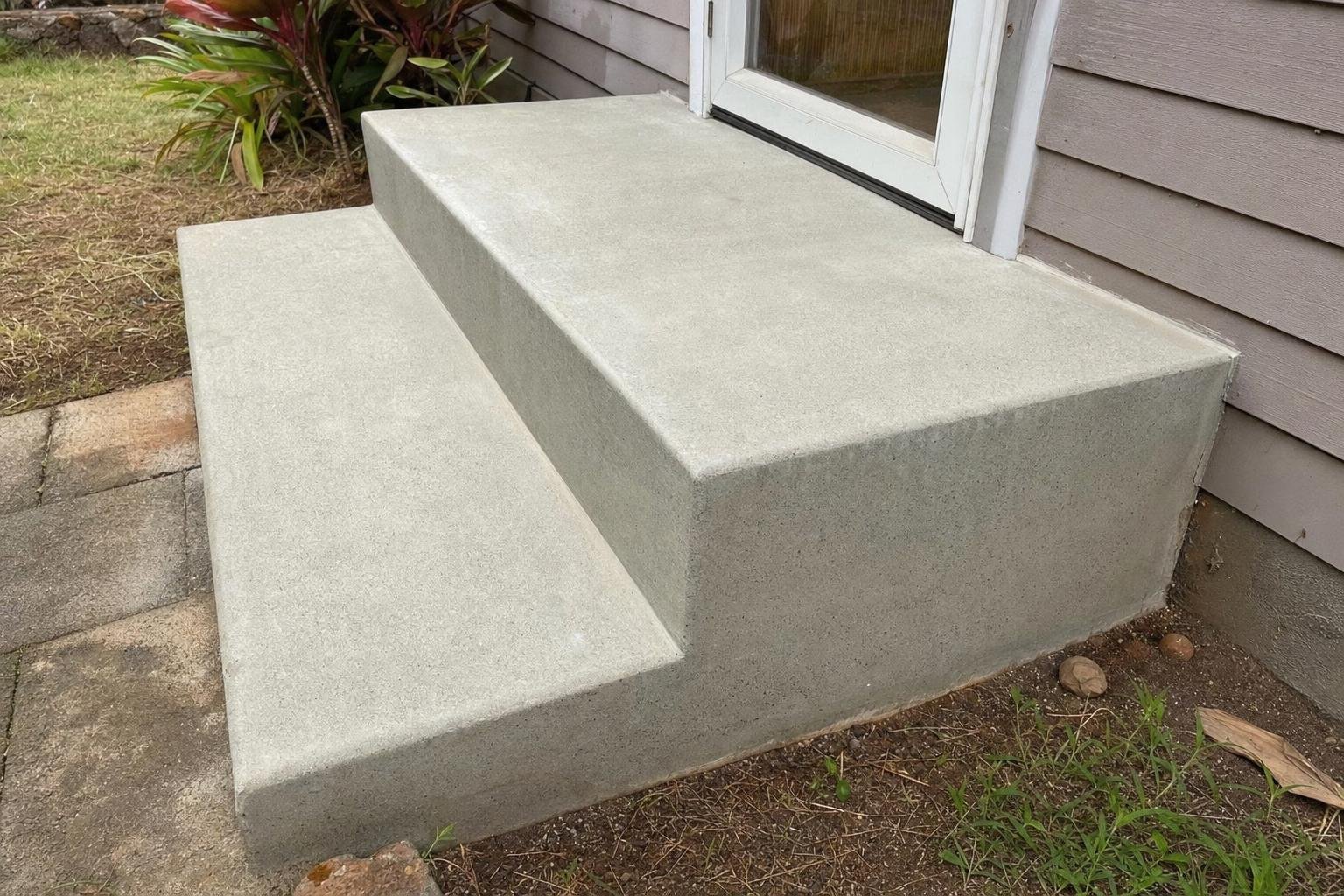
Flaking and pitting
A top layer that flakes underfoot or a surface that has gone rough with small pits has broken down at the face. A slab here soaks through the winter rains and then bakes through a hot, dry summer, and that cycle wears the surface every year.
A few small spots can often be repaired on their own. When the pitting covers most of the slab but the concrete underneath is sound, resurfacing is usually the right call. When the damage goes deep, we cut out the bad area and pour a full-depth repair.
Heaving, tilting, or a new step where there wasn't one
A section that has risen above its neighbor, or a porch slab that now pitches toward the house, means the ground underneath has moved. We first check whether the movement has stopped. A slab that settled once and stayed put needs a different fix than one that is still shifting. Sometimes the concrete is fine and the real problem is the base, and we can't tell until we open it up.
On properties close to the harbor, coastal groundwater is expected to rise along with sea level. When we rebuild a slab on low ground near the water, we plan the base and drainage for that.
Pouring in trade winds and heat
We never lose a day to cold in Kahului, but the northeasterly trade winds and the heat can pull moisture out of a fresh slab faster than it should leave. That causes surface cracking. We start curing as soon as the surface is firm enough not to mar, using a curing compound or a moisture-retaining cover such as wet burlap or plastic, so the slab can gain its strength slowly.
What to tell us when you call
Describe what you see, not what you think caused it. For example: the crack has gotten longer since last year, water pools in this corner after heavy rain, this slab sits about an inch below the one next to it. Tell us how long it has been happening, whether it has changed, and where it is on the property. Photos taken at different times help a lot. If what you have can wait, we'll tell you that.
What it costs
Resurfacing a sound slab typically runs $4 to $6.50 per square foot. New stamped concrete runs $13 to $18 per square foot, depending on the design. We can give you a typical range on the phone, and we confirm the exact number once we've seen the job. Repair and partial replacement depend on how much has to come out and what the base looks like underneath, so for that work the site visit sets the price.
What It Typically Costs
Treat these figures as a planning guide, and yours gets its own written price once we've seen it.
$10.50–$25 per sq. ft.
$10.50–$15.50 per sq. ft.
$5–$25 per sq. ft.
Straight Answers
A conversation on the phone is the easiest start, no obligation.
Updated October 2026